


Why Dowel plates and Sleeves Are Important in Industrial Flooring
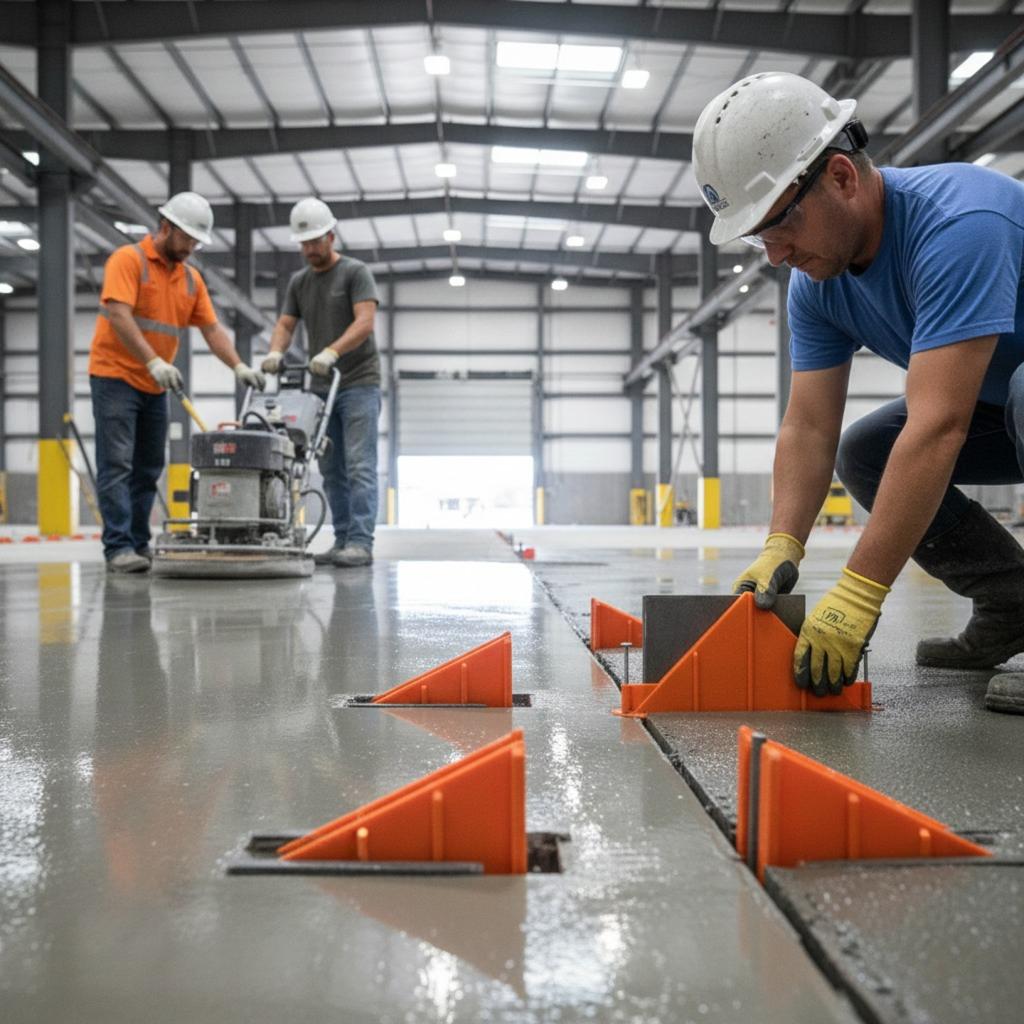
Industrial flooring is expected to perform under extreme conditions—heavy machinery movement, continuous forklift traffic, impact loads, and thermal variations. In such demanding environments, the true strength of a concrete floor lies not just in the concrete itself, but in how well its joints perform. This is where dowel plates and sleeves become critical components of industrial flooring systems.
Dowel plates and sleeves are smooth steel rods installed across concrete joints to ensure effective load transfer between adjacent slabs. When heavy loads pass over a joint, dowel plates and sleeves help distribute the stress evenly, preventing one slab from carrying the entire load. Without dowel plates and sleeves, slabs are more prone to differential settlement, cracking, and edge breakage—leading to premature floor failure.
Equally important are dowel plates and sleeves, which allow controlled horizontal movement of the dowel plates and sleeves. Concrete naturally expands and contracts due to temperature changes and shrinkage. Sleeves ensure that this movement happens freely without creating internal stress. By preventing restraint at the joints, sleeves protect the slab from cracking and joint spalling.
In industrial facilities, poorly designed or unprotected joints can result in:
- Uneven floors and joint damage.
- Increased maintenance and repair costs.
- Reduced equipment efficiency due to vibration and surface irregularities.
- Safety risks for operators and vehicles.
A well-designed dowel plates and sleeve system:
- Enhances joint performance.
- Improves load-bearing capacity.
- Maintains surface levelness.
- Extends the overall life of the floor.
At MIDAS, we focus on engineering solutions that strengthen industrial floors at their most vulnerable points—the joints. Our high-quality dowel plates and sleeves are designed for precision, durability, and long-term performance, ensuring your industrial flooring remains strong, stable, and reliable for years to come.
Because in industrial flooring, strength is not just built—it is engineered.